8 Best Extra-Thick Yoga Mats for Gentle Stretching and Floor Work — Cushioned Comfort for Low-Impact Practice
Extra-thick yoga mats cushion joints and make gentle stretching and floor work more comfortable, especially for people with sensitive knees, wrists, or lower backs. We’ve used thinner mats for years and noticed how extra padding changes our practice: it reduces pressure points during poses, helps us stay on the mat during longer holds, and makes restorative routines feel safer and more sustainable.
When choosing an extra-thick mat, prioritize thickness and density, surface grip, and durable, non-toxic materials — those factors determine comfort, stability, and long-term value. The best mats balance plush cushioning with firm support and a grippy surface so you don’t sink into the mat or slip during transitions. In the sections that follow, we test and compare top options to help you find the mat that fits your practice and preferences.
Best Extra-Thick Yoga Mats for Gentle Stretching and Floor Work
We tested and compared extra-thick yoga mats that cushion joints and support slow, restorative movements. Below is our curated list of eight reliable mats suited for gentle stretching, mobility work, and comfortable floor exercises.
HAPBEAR Extra Large Yoga Mat (6mm)
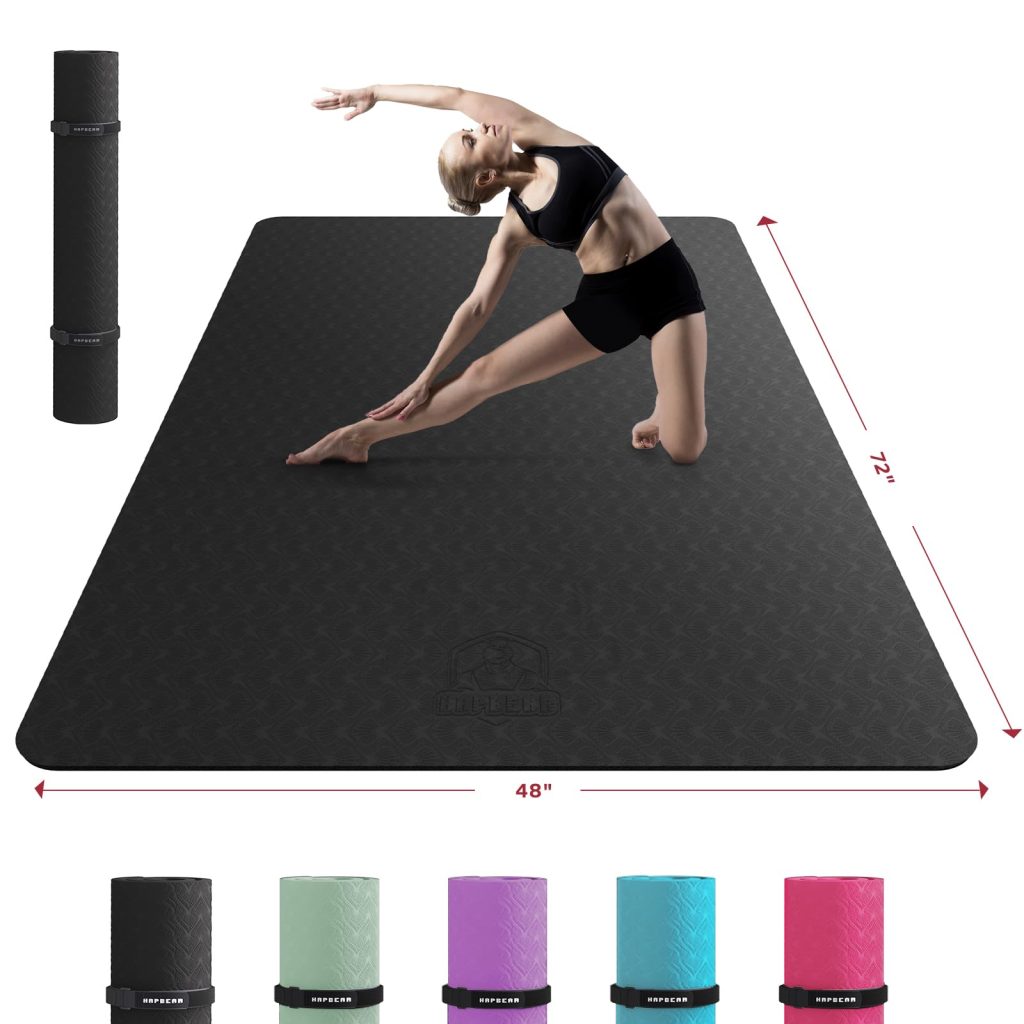
We recommend this if you want extra floor space and firm cushioning for gentle stretching and bodyweight work.
Pros
- Very large surface gives plenty of room for movement.
- Noticeable cushioning that protects joints during floor work.
- Eco-friendly TPE material and comes with carrying straps.
Cons
- Grip can be inconsistent for some users, especially with sweaty hands or feet.
- Not intended for use on carpet — may shift on some surfaces.
- Larger size can be awkward to store in small spaces.
The mat’s oversized dimensions make it easy for us to spread out for stretching, Pilates, or longer planks without stepping off the edge. Its 6mm thickness adds visible padding for knees and elbows while remaining stable for seated work.
We found the double-sided textured pattern aims to lock the mat in place, but several users reported slipping during sweaty practices. Using a towel or practicing barefoot on dry surfaces reduces slippage risk.
The TPE construction keeps the mat relatively lightweight for its size and meets eco-friendly standards, which appeals if sustainability matters to us. Expect a brief manufacturing smell that dissipates after airing the mat for a day or two.
Overall, this mat suits anyone who prioritizes space and joint protection for gentle stretching, at-home circuits, or meditation, as long as you manage surface traction and storage.
Gorilla Mats Extra Large Mat (9’x6′)

We recommend this mat if you want thick, roomy cushioning for gentle stretching and floor work that stays put on hard floors.
Pros
- Very thick 8mm padding protects knees and joints.
- Extra-large surface gives plenty of space for stretches and movement.
- Includes towel, carry bag, and straps for storage and transport.
Cons
- Heavy and bulky to move or store compared with standard mats.
- Some users may find the foam too soft for balance-focused poses.
- Material may require airing after cleaning to fully dry.
This oversized mat feels designed for at-home practice and bodyweight routines where space and cushioning matter more than portability. We see it as a practical choice for living rooms, garages, or basements where you want a stable, soft surface underfoot.
The textured top layer aims to reduce slipping when barefoot, and the patterned underside helps the mat grip hard floors. We expect the 8mm thickness to absorb pressure on knees and wrists during gentle stretching and floor exercises.
Gorilla Mats bundles a microfiber towel, straps, and a carry bag, which helps keep things tidy if we move the mat occasionally. The weight and size make it less convenient for frequent transport, but excellent if we set up a permanent home practice area.
VTORY Extra Thick Mat

We recommend this mat if you want heavy-duty cushioning and a large surface for gentle stretching, floor work, and impact-heavy home workouts.
Pros
- Thick, dense padding cushions knees and joints well.
- Large sizes give plenty of space for stretches or partner work.
- Heavier weight and textured surface resist slipping during dynamic moves.
Cons
- PVC material can retain a faint compression odor at first.
- Heft and size make it less convenient to move often.
- Some buyers expected slightly greater thickness than listed.
We like the VTORY for low-impact routines and floor-based mobility work because the 8 mm density absorbs shock more than typical yoga mats. The extra area helps when we switch between poses, stretches, or core exercises without stepping off the mat.
The waterproof surface makes quick cleanup easy after sweaty sessions, and the included straps simplify rolling and storage. For home gyms with wood or tile floors, the mat’s weight and non-slip texture reduce sliding during brief higher-intensity moves.
This mat suits people who prioritize joint protection and space over portability; it feels substantial under hands and knees and reduces noise from weights or equipment. If you need a lightweight travel mat, this model may feel bulky, but for stable, comfortable floor work at home it performs well.
HAPBEAR Extra Large Exercise Mat (7’x5′)

We recommend this mat if you want extra floor space and cushioned support for gentle stretching, floor work, and higher-impact home workouts.
Pros
- Thick, high-density foam cushions knees and joints.
- Large sizes give plenty of room for varied workouts.
- Non-slip top and suction bottom improve stability.
Cons
- Firmer feel may not suit those wanting very soft padding for long floor holds.
- Noticeable initial rubber odor for some users.
- PVC material can feel slick with bare feet for certain moves.
The mat’s extra-large footprint and 8 mm thickness make it suitable for gentle stretching, mobility sessions, and multi-movement floor routines. We can see how the size helps keep equipment and movement contained in one area.
Its dual-layer anti-slip texture aims to reduce sliding during lunges or push-ups, which benefits gentle flow sequences and light cardio. The included resistance bands and storage bag add practical value for compact storage and light training.
Expect a firmer surface than plush yoga mats; that firmness helps with balance but may feel less comfortable for extended supine work. The initial smell tends to fade after airing out, and the mat wipes clean for simple maintenance.
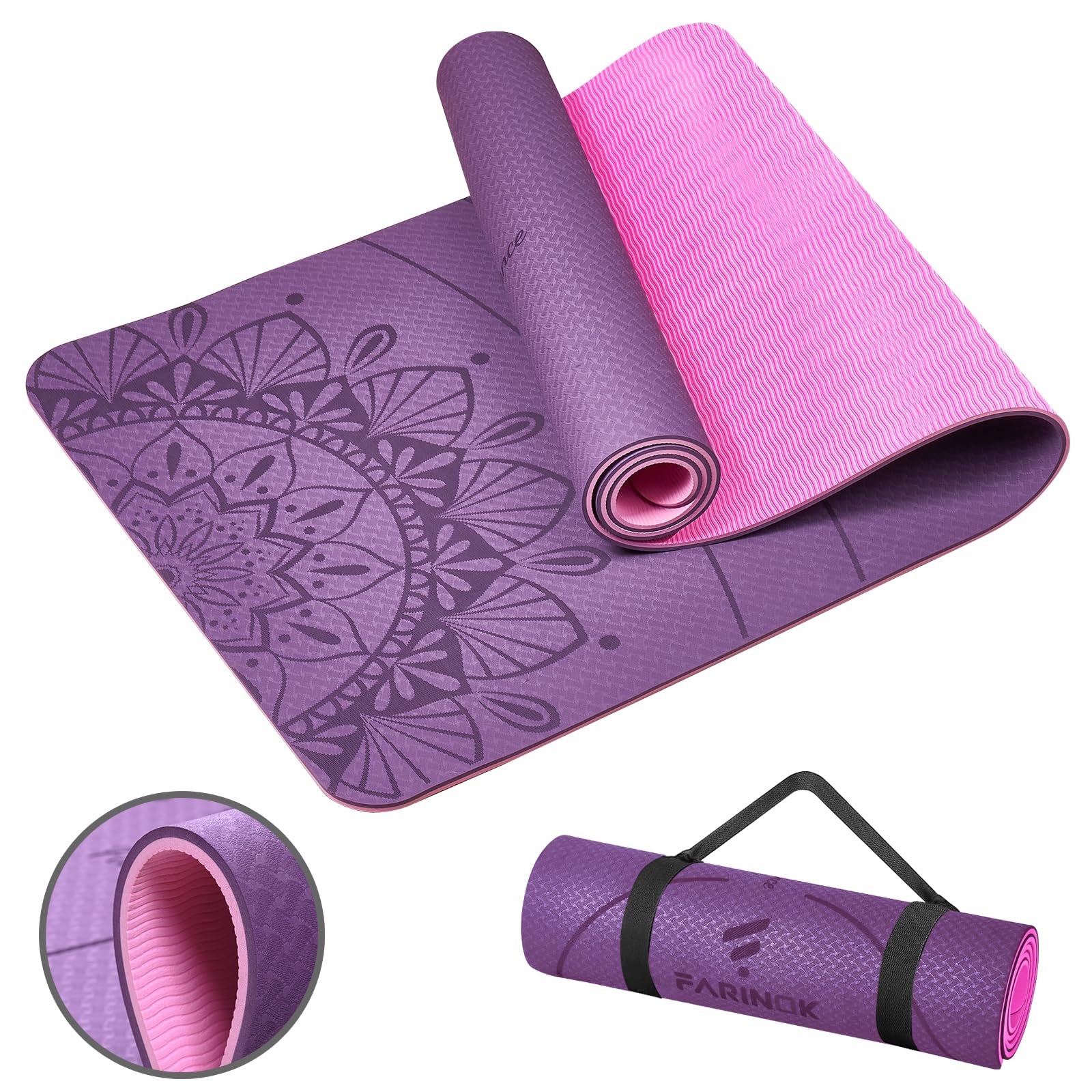
FARINOK Extra-Thick Yoga Mat (Purple)
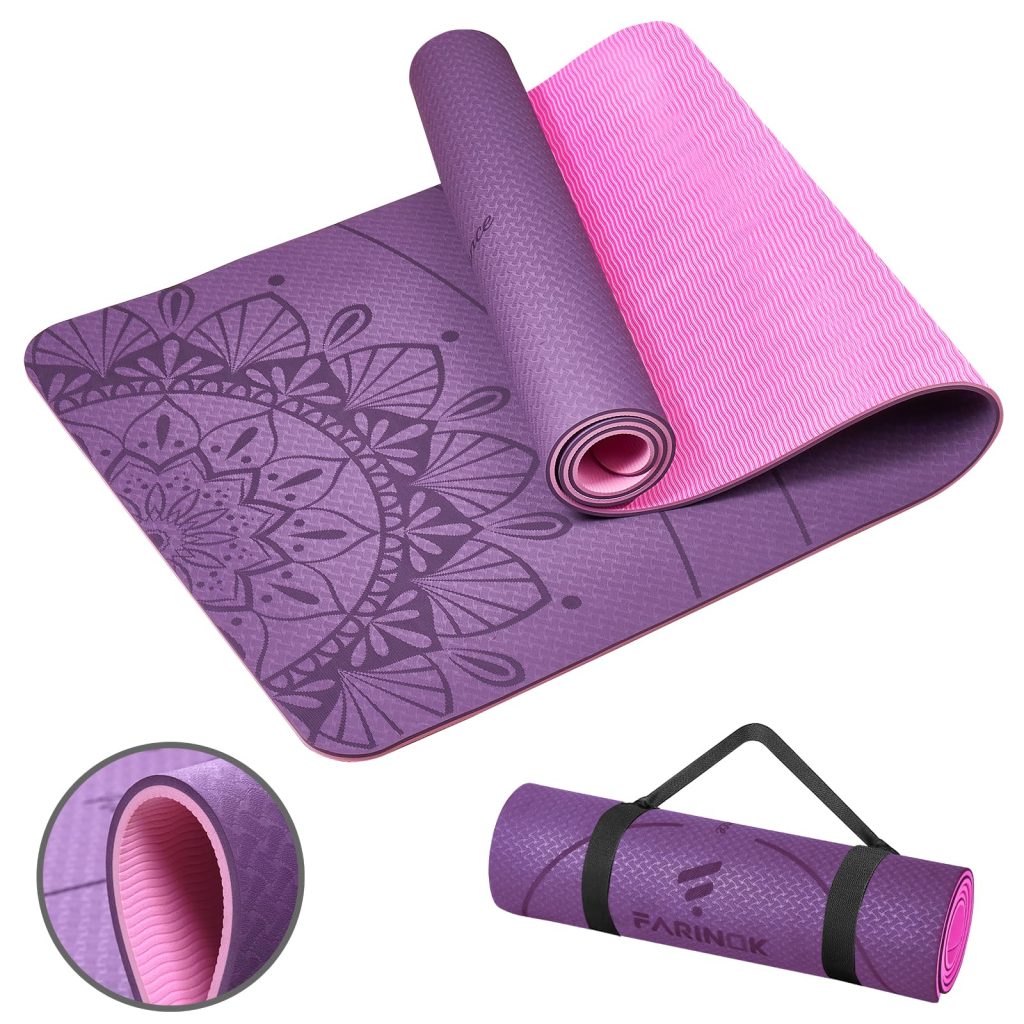
We recommend this mat if you want firm, extra cushioning for gentle stretching and joint support without PVC smell.
Pros
- Thick, supportive cushioning protects knees and joints.
- Double-sided textured surface offers reliable non-slip grip.
- Eco-friendlier TPE/EVA mix with minimal odor and easy cleaning.
Cons
- Stiffness may feel too firm for users who prefer very soft mats.
- Rolls up bulky and can feel heavy to carry without a robust strap.
- Not the thinnest option for travel or tight storage spaces.
The mat’s 8 mm padding aims to reduce pressure on knees during stretches and floor work while keeping balance steady. We appreciate the dual-layer design that blends a softer top with a firmer base for stability.
Textured surfaces on both sides help maintain traction on wood, tile, or carpeted floors. The higher-density TPE and EVA materials promise better tear resistance than basic PVC options.
Cleaning and maintenance stay simple: a wipe-down usually suffices. We note the included strap helps transport, but the mat still feels bulky when rolled.
Retrospec Solana 1″ Thick Yoga Mat

We recommend this mat if you want maximum cushioning at home for gentle stretching and floor work.
Pros
- Very thick cushioning eases pressure on knees and joints.
- Wide, non-slip texture helps keep poses steady.
- Includes a carrying strap for easier transport and storage.
Cons
- One-inch thickness may feel too soft for standing flows or studio classes.
- Initial packaging odor can require airing out.
- Foam surface may attract pet hair and compress over long-term heavy use.
The Solana mat stands out for its extra-thick foam, which we find helpful when padding sensitive knees, wrists, or hips during low-impact sessions. Its size gives room for stretching, and the ribbed surface aims to reduce slipping on hard floors.
We noticed the mat’s one-inch profile makes it excellent for restorative yoga, Pilates floor work, and guided mobility routines, but it can reduce balance feedback during standing balances. Some users report the mat needs time to flatten after unrolling and to air out to dissipate smell.
We appreciate the included nylon strap for carrying and storage. The mat’s chemical-free marketing addresses safety concerns for those avoiding harsh additives, though buyers should still air the product before use if odor appears.
HAPBEAR XL Yoga Mat
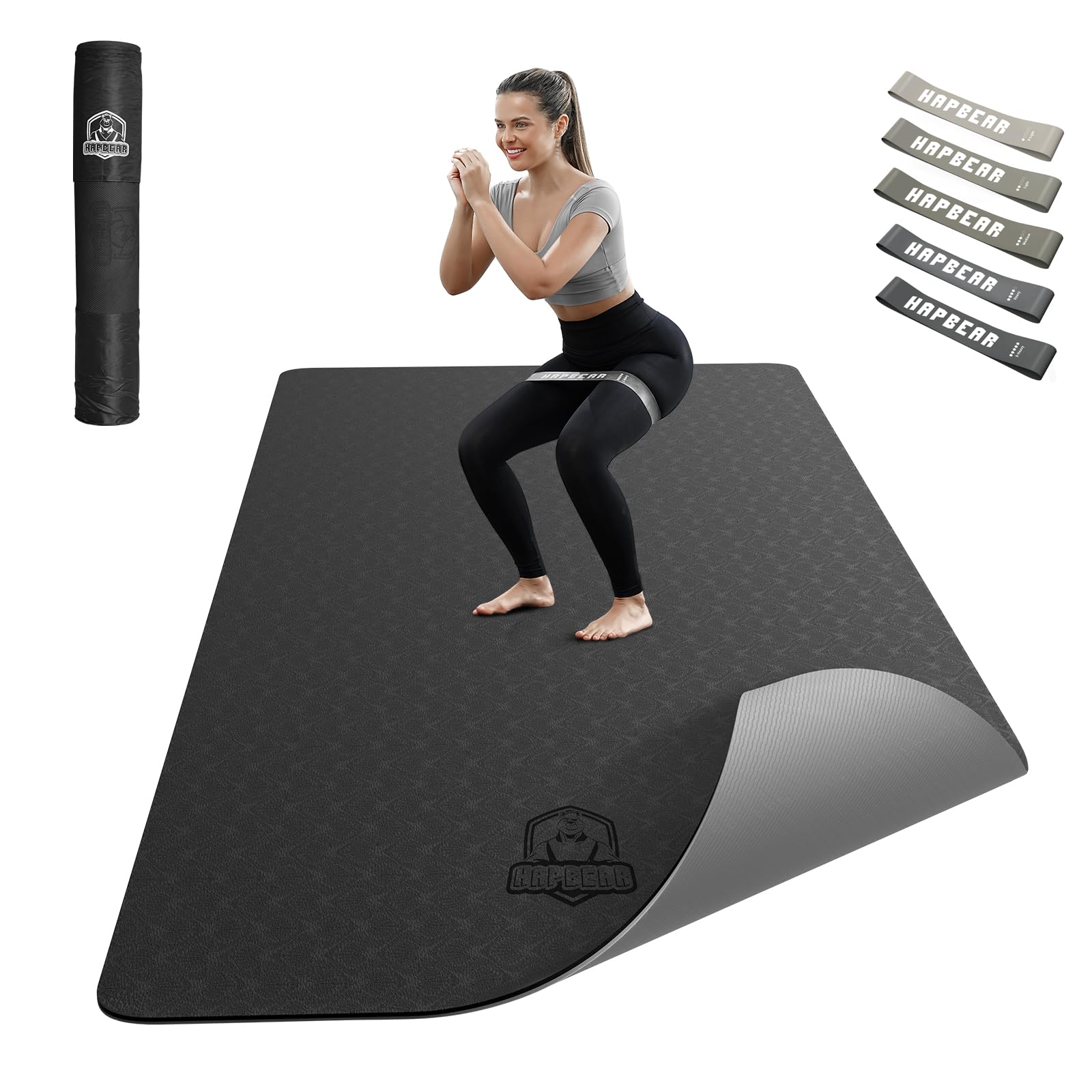
We recommend this mat if you want extra width and solid cushioning for gentle stretching and floor work.
Pros
- Very wide surface gives room to stretch without repositioning.
- 6mm thickness balances cushioning and stability.
- Eco-friendly TPE and includes carry bag plus resistance bands.
Cons
- Not ideal on carpet — traction works best on hard floors.
- Some users note an initial smell that needs airing out.
- Bonus bands are basic rubber-style, not fabric.
The generous 72″ x 36″ size feels noticeably roomier than standard mats, which helps when we move between poses or do bodyweight exercises. The extra width reduces the need to constantly shift our feet and hands.
At 6mm thick, the mat provides padding that protects knees and elbows during low-impact work without feeling unstable. The double-sided textured grip aims to keep the mat from sliding on hardwood or tile.
Made from TPE and Climate Pledge Friendly certified, the mat appeals to shoppers who prefer lower-impact materials. We should expect to air it out for a day or two to reduce any factory scent.
Carrying it is straightforward thanks to the included bag, and the lightweight feel makes transport simple. The packaged resistance bands add value for basic strength or mobility drills, though serious users may want higher-quality bands.
Retrospec Solana 1″ Yoga Mat

We recommend this mat if you want maximum cushioning at home for gentle stretching and floor work.
Pros
- Thick, forgiving cushioning protects knees and joints.
- Stable, textured surface helps reduce slips.
- Includes a carrying strap for easy transport.
Cons
- Noticeable initial odor that may need airing out.
- One-inch thickness can feel unstable for standing balances.
- Foam can compress with heavy, prolonged use.
The extra 1″ foam gives strong shock absorption, which benefits anyone with sensitive knees or wrists during floor exercises. We find it especially suited for Pilates, restorative yoga, and low-impact routines.
The ribbed, non-slip surface aims to keep mats from sliding on hardwood or tile. We should note that the slipperiness of hands or feet when sweaty may still require a towel or grip aid.
This mat ships rolled tightly and can take time to flatten; unrolling it a day before use usually helps. We appreciate the nylon strap for moving it between home and car, though the bulk makes it less convenient for crowded studio classes.
Buying Guide
We focus on comfort, support, and durability when choosing an extra-thick yoga mat. Think about the thickness that suits your practice: 6–12 mm gives cushioning for sensitive joints, while thicker pads may reduce stability for balance poses.
We check material and grip next. Look for non-toxic, high-density materials that resist compression; a textured surface or tacky finish improves traction when we sweat.
We consider size and weight for portability. Longer and wider mats suit taller users; heavier, denser mats offer more support but can be harder to carry to classes.
We evaluate firmness and compression resistance. A mat that compresses too much can undermine support during floor work. We prefer mats that balance softness with enough firmness for alignment.
We pay attention to cleaning and care. Machine-washable covers or wipeable surfaces simplify maintenance. Antimicrobial treatments can help, but we still clean mats regularly.
We compare warranty, return policy, and price. Longer warranties and flexible return windows indicate manufacturer confidence. Match the mat’s features to how often and where we’ll use it.
We use this checklist when shopping:
- Thickness (mm) and how it affects support
- Material safety and density
- Surface texture and grip
- Dimensions and weight
- Ease of cleaning
- Warranty and return policy
We recommend testing a mat when possible to confirm comfort and stability before committing.