

The Top 3 Symptoms of ME/CFS You Need to Know and How to Manage Them Easily
Myalgic encephalomyelitis/chronic fatigue syndrome (ME/CFS) is a complex illness that affects millions worldwide, yet many people still don’t fully understand its symptoms. The top three symptoms that define ME/CFS and help identify it are overwhelming fatigue, worsening symptoms after exertion, and unrefreshing sleep. These symptoms are distinct from regular tiredness and significantly impact daily life.
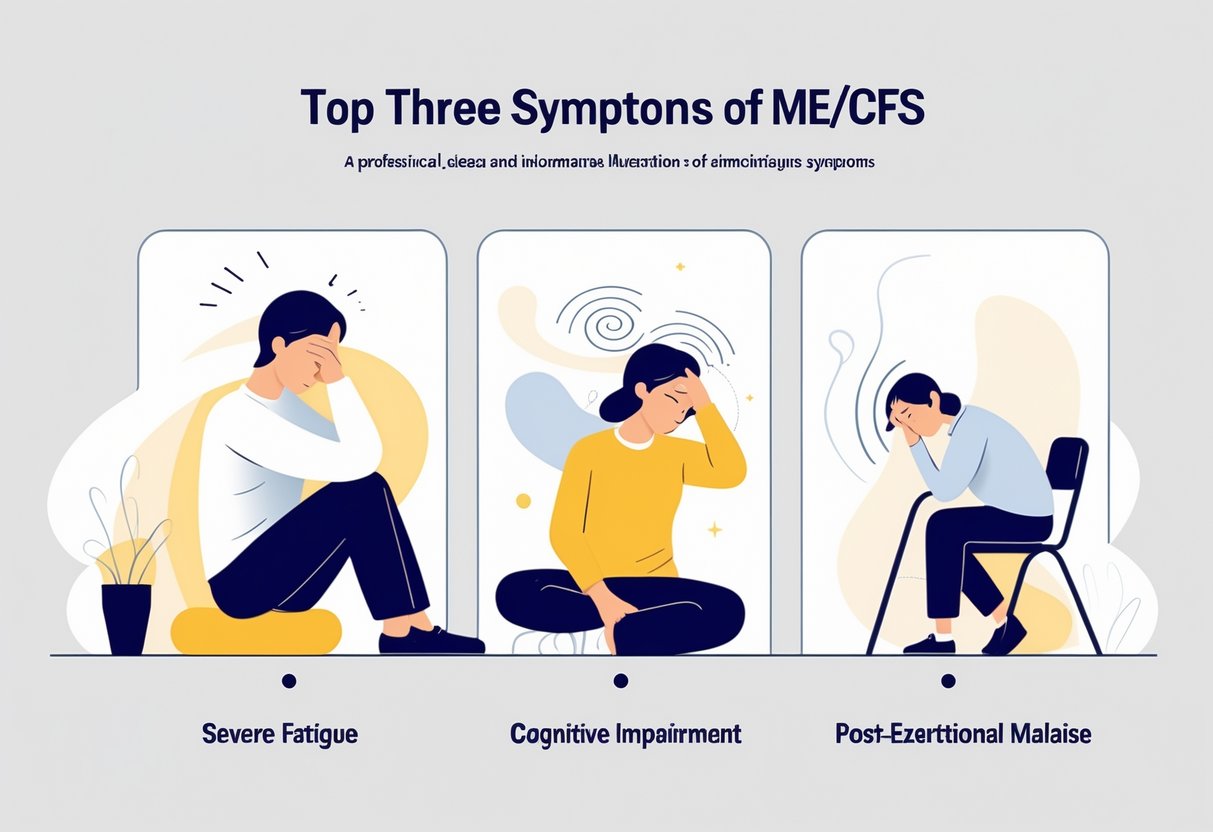
Fatigue in ME/CFS is not just feeling tired; it is a profound lack of energy that lasts for six months or more and limits the ability to perform everyday activities. The exhaustion often worsens after physical or mental activity, a symptom known as post-exertional malaise. Additionally, people with ME/CFS commonly experience sleep that does not restore them, no matter how long they rest.
Understanding these key symptoms is important for recognizing ME/CFS and seeking appropriate care. Recognizing how these symptoms affect the body and mind can lead to better support and management strategies for those living with this condition.
Key Takeaways
- ME/CFS causes severe and long-lasting fatigue that limits daily activities.
- Symptoms often worsen after physical or mental effort, known as post-exertional malaise.
- Sleep does not refresh the individual, leading to ongoing exhaustion.
Understanding ME/CFS and Its Impact
ME/CFS is a complex condition with symptoms that affect physical, mental, and emotional health. People with ME/CFS often face challenges that interfere with their daily lives and ability to perform routine activities. The causes are not fully known, but certain factors are thought to contribute.
What Is Myalgic Encephalomyelitis/Chronic Fatigue Syndrome
Myalgic Encephalomyelitis/Chronic Fatigue Syndrome (ME/CFS) is a chronic illness marked by severe fatigue that doesn’t improve with rest. It lasts for more than six months and significantly reduces a person’s ability to carry out tasks they could do before becoming ill.
Beyond fatigue, ME/CFS involves neurological, immune, and metabolic dysfunctions. Symptoms like unrefreshing sleep, cognitive difficulties (often called “brain fog”), and worsening of symptoms after physical or mental exertion are key features.
Who Is Affected by ME/CFS
ME/CFS can impact people of all ages, including children, adolescents, and adults. It affects both men and women, but studies show it is more common in women. The illness varies widely in severity—from some who can manage limited activity to those who are largely bedridden.
Symptoms must last at least three to six months to be considered ME/CFS and must not be explained by other medical conditions. The impact is often long-lasting, and daily life, including work or school, can become very difficult.
Common Triggers and Causes
The exact cause of ME/CFS is unknown. However, experts believe it may result from a combination of triggers such as infections, immune system issues, stress, or environmental factors. Viral infections are often reported before symptoms begin.
Other triggers may include physical or emotional trauma and genetic predisposition. There is no specific test to confirm ME/CFS; diagnosis involves ruling out other conditions with similar symptoms. Treatment focuses on managing symptoms rather than curing the disease.
Core Symptom 1: Profound Fatigue

Profound fatigue in ME/CFS is much more than feeling tired. It profoundly limits a person’s ability to perform everyday tasks, and this exhaustion does not improve with rest. Understanding the nature, impact, and distinct qualities of this fatigue is essential.
Characteristics of Severe Tiredness
This fatigue is persistent and overwhelming. It lasts for at least six months and is not relieved by sleep or rest. People with ME/CFS often describe it as an energy depletion that feels physical and mental at the same time.
The tiredness can be so intense that it affects concentration and memory. This is often called “brain fog.” Fatigue can vary throughout the day but normally does not fully subside without long recovery periods, which might last days or weeks.
Comparison with Normal Tiredness
Unlike typical tiredness after work or exercise, ME/CFS fatigue is not proportional to activity level. It does not result from lack of rest or poor sleep habits.
Rest and sleep usually improve normal tiredness, but in ME/CFS, these measures do not bring the same relief. The fatigue feels more severe, persistent, and resistant to common remedies.
Activity Limitation and Daily Life
Fatigue significantly reduces a person’s ability to complete daily routines. Activities that were once simple, such as walking, cooking, or working, can become overwhelming or impossible.
This limitation often leads to a noticeable decline in quality of life. Many individuals have to cut back on their social, professional, or physical activities due to chronic exhaustion.
Core Symptom 2: Post-Exertional Malaise (PEM)
Post-Exertional Malaise (PEM) is a key symptom of ME/CFS that involves a significant worsening of symptoms after physical, mental, or emotional activity. It differs from normal tiredness by being delayed and often much more severe. Many people with ME/CFS find their ability to function decreases sharply after even small efforts.
How Post-Exertional Malaise Manifests
PEM typically appears as a marked increase in severe tiredness and other symptoms after exertion that would not have caused problems before. This can include heightened cognitive difficulties, headaches, sore throat, muscle pain, and dizziness.
Symptoms tend to develop hours or even a day after the activity and are disproportionate to the effort made. The feeling of exhaustion can be overwhelming, making it difficult for them to continue daily tasks or think clearly.
People may also experience new symptoms during PEM that are not part of their usual baseline, such as nausea or sensitivity to light and sound.
Triggers of Worsening Symptoms
Triggers of PEM are not limited to physical exercise. Even minimal mental activities like reading, problem-solving, or emotional stress can provoke it.
Social interaction, sensory overload, or staying upright for long periods may also cause a crash in symptoms. The key factor is that the activity demands more energy than the body can safely provide.
These triggers vary from person to person. What causes PEM in one individual may not affect another, making personalized management essential.
Recovery Periods and Management
Recovery from PEM can take days, weeks, or longer, depending on the severity of the episode. Rest is crucial, often requiring complete cessation of activity.
Pacing—balancing activity and rest to avoid overexertion—is a primary strategy to manage PEM. Patients are encouraged to recognize early warning signs and stop before symptoms worsen.
Some use symptom tracking and energy budgeting to plan daily tasks. Proper management helps reduce the frequency and duration of PEM episodes, improving quality of life.
Core Symptom 3: Unrefreshing Sleep

Unrefreshing sleep is a common issue for people with ME/CFS, often experienced as waking up still feeling tired despite a full night’s rest. This sleep problem affects the quality of life and daily functioning in several distinct ways.
Sleep Difficulties in ME/CFS
Many individuals with ME/CFS struggle with problems sleeping, including difficulty falling asleep, staying asleep, and experiencing frequent awakenings. Some report insomnia symptoms, where the mind remains active, preventing restful sleep.
Others face hypersomnia, which means they sleep excessively but still feel exhausted. These patterns disrupt normal sleep cycles and prevent restorative rest.
These sleep difficulties are not just occasional but persistent, often lasting months or longer, worsening fatigue and other symptoms. Sleep disturbance is considered a core feature of this condition.
Differences in Sleep Quality
People with ME/CFS often experience unrefreshing or nonrestorative sleep, meaning that even after sufficient hours, their sleep does not adequately recharge the body.
Their sleep might be lighter, more fragmented, or altered compared to a typical sleep pattern. They may move through the sleep stages abnormally, failing to reach deep, restorative sleep.
This difference is not always obvious to the sleeper, who may believe they slept normally but still feel physically and mentally drained upon waking. This contrasts with the feeling most people have after restful sleep.
Daytime Impact of Nonrestorative Rest
The inability to get refreshing sleep directly affects daytime function. People with ME/CFS often report persistent daytime exhaustion and cognitive difficulties, including trouble concentrating and memory problems.
They may feel stiff, flu-like, or drained upon waking. These symptoms can worsen after physical or mental exertion, making daily activities harder and reducing quality of life.
Nonrestorative sleep also contributes to the hallmark fatigue that lasts for six months or more in ME/CFS, leading to a cycle of fatigue and poor sleep that is hard to break.
Cognitive and Neurological Issues
People with ME/CFS often experience problems with thinking and memory, alongside physical neurological symptoms. These difficulties can affect everyday activities, making tasks like focusing or processing information more challenging.
Difficulty Thinking and Concentrating
Many individuals with ME/CFS report trouble concentrating and slower thinking speeds. This can make it hard to follow conversations or complete tasks that require sustained mental effort.
This difficulty is sometimes called brain fog, but it involves a range of cognitive issues including reduced attention span and trouble processing details. These problems can vary daily and worsen with mental or physical exertion.
Cognitive Fatigue and Memory Problems
ME/CFS often causes mental exhaustion after cognitive activities, which can make it difficult to retain new information. Short-term memory lapses and mixing up words are common complaints.
The cognitive fatigue associated with ME/CFS can make learning or organizing thoughts frustrating. Many people describe it as a heavy mental drain that requires rest to recover from.
Headaches and Sensory Symptoms
Headaches are frequent in ME/CFS and can vary in intensity from mild to severe. These headaches often accompany other neurological symptoms like sensitivity to light or sound.
Sensory hypersensitivity can also include heightened reactions to touch, smells, or temperature, further complicating daily comfort and focus. These symptoms often worsen alongside cognitive challenges.
Managing and Living with ME/CFS Symptoms
Living with ME/CFS requires a mix of strategies tailored to each person’s needs. Symptom relief often involves careful management and support from healthcare providers. Adjusting daily habits helps reduce flare-ups and improves quality of life.
Strategies for Symptom Relief
People with ME/CFS find symptom relief by pacing their activities to avoid exhaustion. Rest periods are essential, especially after any activity that triggers post-exertional malaise. Gentle, low-impact exercises like stretching or slow walking may help, but only if done carefully and gradually.
Managing sleep hygiene is also crucial, as unrefreshing sleep worsens symptoms. Some may benefit from techniques like calming bedtime routines or consulting doctors about sleep aids. Monitoring symptom patterns and triggers can guide useful adjustments in lifestyle and treatments.
Importance of Medical Support
Regular medical support is vital in managing ME/CFS symptoms effectively. Healthcare providers help monitor symptoms, rule out other conditions, and tailor treatment plans to individual needs.
Collaboration between patients, families, and health professionals improves symptom management. Specialists may offer guidance on medication for pain, sleep problems, or other specific issues. Access to counseling or support groups can also help with emotional challenges related to the illness.
Adapting Daily Activities
Adapting everyday activities is often necessary to live better with ME/CFS. Planning schedules to include rest and avoiding overexertion reduces symptom flare-ups.
Using energy-conservation techniques like prioritizing tasks, breaking activities into smaller steps, and using assistive devices can make daily life more manageable. Communication with employers, schools, or loved ones about limitations supports realistic expectations and accommodations.
Frequently Asked Questions
ME/CFS involves specific symptoms and diagnostic steps. Understanding these details helps clarify what to expect and how to proceed if someone suspects they have the condition.
What are the primary symptoms of Chronic Fatigue Syndrome?
People with ME/CFS must experience a significant reduction in their ability to perform activities they did before illness onset, accompanied by persistent fatigue lasting six months or more.
Other core symptoms include post-exertional malaise, unrefreshing sleep, cognitive impairments, and orthostatic intolerance. At least three main symptoms plus one additional symptom from other categories are necessary for diagnosis.
How can I tell if I have Myalgic Encephalomyelitis/Chronic Fatigue Syndrome?
A diagnosis requires at least six months of unexplained fatigue that reduces activity levels. Healthcare providers will also evaluate symptoms like worsening of fatigue after exertion and sleep problems.
Other conditions must be ruled out before diagnosing ME/CFS. Tracking symptom patterns and impact on daily life is essential for accurate assessment.
Is there a definitive test for diagnosing Chronic Fatigue Syndrome?
No single test confirms ME/CFS. Diagnosis is clinical, based on symptom criteria and excluding other illnesses with similar symptoms.
Laboratory tests help rule out other causes but do not diagnose ME/CFS directly. Diagnosis depends on a thorough medical history and symptom evaluation.
Can you overcome Chronic Fatigue Syndrome, and if so, how?
Currently, there is no known cure for ME/CFS. Management focuses on symptom relief and improving quality of life through pacing activities and addressing specific issues like sleep or pain.
Recovery timelines vary widely, and some patients experience improvement, while others face long-term challenges. Support and personalized care are crucial.
What are the latest advancements in treatment for Chronic Fatigue Syndrome?
Research continues in understanding ME/CFS mechanisms, including immune and neurological factors. Emerging treatments aim to target these underlying issues but remain largely experimental.
Symptom management remains the primary approach, with ongoing studies exploring new medications and therapies to help reduce symptoms.
Which type of physician should I consult for a Chronic Fatigue Syndrome diagnosis?
Patients typically start with a primary care physician who can evaluate symptoms and rule out other causes. Specialists such as neurologists, immunologists, or infectious disease experts may be involved for further assessment.
A multidisciplinary approach often benefits patients due to the complex nature of the illness.


